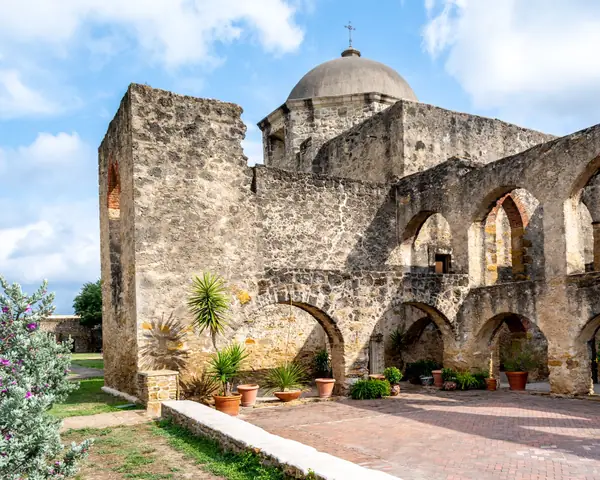
San Antonio, Texas
Water filtration in San Antonio, matched to your water.
SAWS puts its typical hardness at 15 to 20 grains per gallon. Tell us what you are seeing, and an independent local water treatment pro can contact you and quote the work.
Request a quote- Free to ask
- Nothing to buy unless you choose
- Four short fields
- San Antonio and nearby towns
- 15 to 20 gpgTypical SAWS hardnessThe range SAWS gives for the water it provides.
- Edwards and TrinityWhere the hardness comes fromSAWS says the calcium carbonate occurs naturally in water from both.
- Over 180 mg/LVery hard on the USGS scale15 grains is roughly 255 mg/L, at about 17 mg/L per grain.
- NSF/ANSI 44The standard for softenersResidential softeners that regenerate with sodium or potassium chloride.
Softening and filtration
What a local pro can put in, fix or service
Water softeners lead in San Antonio, because SAWS water is very hard. Each job below has its own guide: pick the one closest to what you are seeing at home.
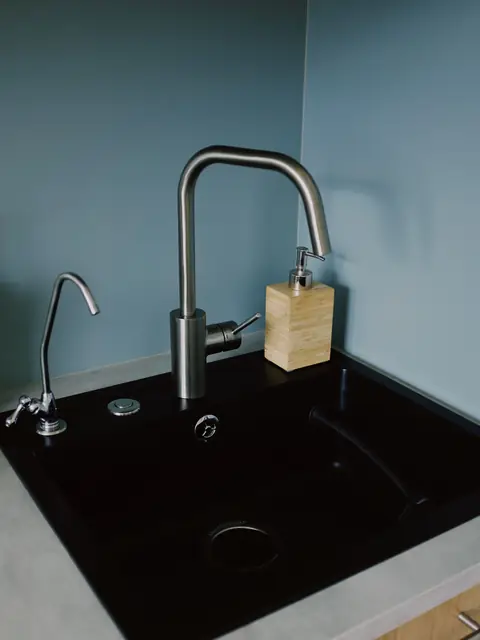
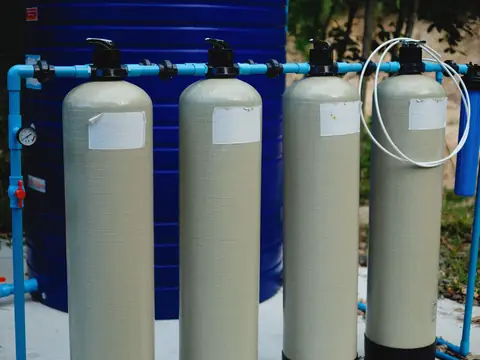
Sized to SAWS hardness, to cut scale on fixtures, glass and pipes.
Read the guide
A new or replacement softener, the permit question and the license rule.
Read the guide
Spots back, salt not dropping or a unit stuck: what to check first.
Read the guide
Salt, brine tank, valve settings and a hardness check after the visit.
Read the guide
Whole-house filters, drinking water filters and reverse osmosis.
Read the guide


How it works
From the request to treated water
One short form, one independent local pro, and every decision stays with you.
- 1
Send the request
Your name, phone, the problem and your ZIP or neighborhood.
- 2
A local pro can contact you
Your request is passed to an independent San Antonio water treatment pro, who can contact you by phone.
- 3
Water tested, system chosen
Ask for a test: hardness and whatever else is in the water decide what fits and what size.
- 4
Your decision
If you go ahead, the work is agreed between you and the pro. If not, nothing is owed.
Where
Across San Antonio and Bexar County
Inside Loop 410, between the loops, and out past Loop 1604 to the towns around the city.
- Alamo HeightsInside Loop 410
- Downtown and SouthtownInside Loop 410
- Medical CenterBetween the loops
- Leon ValleyBetween the loops, northwest
- Castle Hills and WindcrestNorth and northeast Bexar County
- Stone OakNorth of Loop 1604
- HelotesBeyond Loop 1604
- SchertzNortheast, along I-35
- BoerneNorthwest, Kendall County
- New BraunfelsNortheast, Comal County
The 15 to 20 grain figure is SAWS’s, for SAWS customers. If another utility supplies your home, the name is on your water bill: ask that utility for its annual water quality report.
Your water
Why San Antonio water is so hard
The San Antonio Water System (SAWS) says the typical hardness of the water it provides ranges from 15 to 20 grains per gallon. That hardness comes from calcium carbonate found naturally in water from the Edwards and the Trinity Aquifers.
To put that on a scale: the US Geological Survey calls water soft from 0 to 60 mg/L (as calcium carbonate), moderately hard from 61 to 120, hard from 121 to 180, and very hard above 180. One grain per gallon is about 17 mg/L, so 15 grains is roughly 255 mg/L and 20 grains roughly 340 mg/L. SAWS water sits well inside the very hard band.
SAWS is plain on one point: “Hard water is not a health hazard.” The reasons people in San Antonio soften or filter are practical ones. In hard water, soap reacts with the calcium to form soap scum, and more soap or detergent is needed to get things clean (USGS). Deposits build up on dishes, fixtures and basins, and scale can build up inside pipes. The EPA lists “water softener needed to treat hardness” next to scaly deposits and soap that will not lather.
- White crust around faucets, shower heads and on shower glass
- Spots on glasses and dishes after the dishwasher
- Soap and shampoo that will not lather well
- Scale inside kettles, coffee makers and pipes
The San Antonio hard water guide goes through the numbers in more detail, and the water softener page explains how a softener is sized for them.

Read your SAWS water report
SAWS posts its annual water quality reports on its website, and the 2026 report is listed on its download page. Its water quality FAQ gives the hardness range.
- Typical SAWS hardness: 15 to 20 grains per gallon
- On another supplier? Ask it for its annual report
- Keep the figure handy for the pro’s water test
SystemsSoftener, filter or reverse osmosis?
Water filtration in San Antonio covers several different machines, and each does a different job. A softener removes the calcium and magnesium that make water hard. A filter deals with taste, smell or a particular contaminant. A reverse osmosis unit makes drinking water at one tap. The Texas Commission on Environmental Quality (TCEQ) tells homeowners to start with one question: “What contaminant do you want to remove or reduce?”
| System | What it is for | Standard to ask about |
|---|---|---|
| Water softener | Hardness: calcium and magnesium | NSF/ANSI 44 |
| Whole-house carbon filter | Aesthetic effects such as chlorine taste and odor | NSF/ANSI 42 |
| Drinking water filter | Health effects such as lead | NSF/ANSI 53 |
| Reverse osmosis at the sink | Drinking and cooking water | NSF/ANSI 58 |
TCEQ’s advice on choosing equipment is to select a unit certified by NSF, Underwriter’s Laboratory or the Water Quality Association to remove the contaminant you are concerned about, and to make sure it is certified for that contaminant. A softener does not take out chlorine taste, and a carbon filter does not soften, so homes that want both end up with two pieces of equipment. A water test and your SAWS figure decide which ones you need. More on each: water treatment in San Antonio, whole-house filters and reverse osmosis.
Licenses and permitsWho may install water treatment in Texas
Texas has its own rule. Under TCEQ’s Water Treatment Specialist program (30 TAC Chapter 30, Subchapter H), any individual who under contract installs, exchanges, connects, maintains or services water treatment equipment in a public or private water system in Texas needs a Water Treatment Specialist license unless exempt. Plumbers licensed under Texas Occupations Code Chapter 1301 are exempt. A Class II license covers installing and servicing; work on reverse osmosis and deionization equipment needs Class III, or supervision by a Class III holder.
The City of San Antonio adds a permit question. Its Development Services Information Bulletin 121c says the Limited Service Repair (LSR) permit program covers replacing an existing water softener or water purifier, and installing one in an existing building that is already pre-plumbed for it, with no additional piping. Other softener work needs a regular plumbing permit.
Two questions for whoever quotes the work
Which Texas license do you hold for this work, and which City of San Antonio permit applies to this job? The installation page covers both in full.
Drinking waterReverse osmosis for the kitchen tap
A point-of-use reverse osmosis (RO) system is, in the EPA’s words, connected to a single fixture, such as under the kitchen sink. Pressure forces water through a semi-permeable membrane, making treated water (permeate) and reject water (concentrate, or brine). The EPA says RO systems can potentially remove contaminants such as lead, volatile organic compounds, PFAS, arsenic, bacteria and viruses.
RO uses water to make water. The EPA says a typical point-of-use unit sends five gallons or more down the drain for every gallon of treated water, and some inefficient units up to 10. Units with the EPA WaterSense label must send 2.3 gallons or less down the drain per gallon treated. Ask for a WaterSense labeled unit and one certified to NSF/ANSI 58, and remember that in Texas, RO work needs a Class III Water Treatment Specialist, or supervision by one, unless the person is a licensed plumber.
PFASWhere the national PFAS rule stands
An EPA final rule set enforceable limits of 4.0 parts per trillion for PFOA and for PFOS. On May 18, 2026 the EPA proposed two changes: one keeps the PFOA and PFOS limits but lets water systems request two more years, to 2031, to comply; the other would rescind the limits for PFHxS, PFNA, HFPO-DA (GenX) and the mixture hazard index. As of October 2026 both were still proposals; the EPA’s PFAS page has the current status.
What your own water holds is in your utility’s annual water quality report, not in a sales pitch. If PFAS is your concern, TCEQ’s rule applies: pick a unit certified to reduce that contaminant, and ask to see the certification.
Before the visitGetting ready for a water treatment quote
A little preparation makes any quote easier to compare with another one.
- Check your water bill to see who supplies your water. If it is SAWS, its typical range is 15 to 20 grains per gallon; if not, ask your utility for its annual water quality report.
- Write down what you see: scale, spots, a taste or smell, staining, low pressure, or an old unit that has stopped working.
- Find where the main water line enters the house, and whether a softener loop is already plumbed in. That decides which San Antonio permit applies.
- If a softener is already there, note its make and roughly how old it is.
- Ask for a written quote that names the equipment, the NSF/ANSI standard it is certified to, the permit, and the maker’s maintenance schedule.
Then send the request. It is free to ask, and an independent local water treatment pro can contact you.
Questions
Water questions San Antonio homeowners ask
Short answers from SAWS, TCEQ, the EPA and the USGS. Ask for a quote.
Is this a water treatment company?
No. Water Filtration San Antonio is an independent referral service, not an installer or plumber. When you send the form, your details go to an independent local water treatment pro who can contact you and quote the work.
What does it cost to ask?
Nothing. Sending the form is free, and it does not commit you to buy anything. Any price is between you and the pro, so ask for it in writing.
How hard is San Antonio water?
SAWS says the typical hardness of the water it provides ranges from 15 to 20 grains per gallon. On the USGS scale anything over 180 mg/L, a little over 10 grains, is very hard.
Is 20 gpg hard water?
Yes. 20 grains per gallon is roughly 340 mg/L as calcium carbonate, almost twice the 180 mg/L line where the USGS scale starts calling water very hard.
Is hard water a health risk?
SAWS says hard water is not a health hazard. People soften it for practical reasons: scale on fixtures and in pipes, spots on dishes, and soap that will not lather.
What is the major source of water for San Antonio?
SAWS says the hardness in its water comes from calcium carbonate found naturally in water from the Edwards and the Trinity Aquifers. Its annual water quality report describes its supplies.
Do I need a softener and a filter?
They do different jobs. A softener removes hardness; a filter handles taste, odor or a contaminant. TCEQ advises deciding first what you want to remove, then choosing a unit certified for it.
Who can install a water softener in Texas?
Under TCEQ rules, anyone who installs or services water treatment equipment under contract needs a Water Treatment Specialist license unless exempt, and Texas licensed plumbers are exempt. Ask which one the installer holds.

Hard water in San Antonio? Ask a local pro.
Four short fields, free to ask, and an independent local water treatment pro can contact you with a quote.